Oklahoma City · Private instruction
Speed, agility and strength
The athlete underneath the baseball player. First step, change of direction, and getting strong in a way that's right for their age.
Why it matters
Baseball speed isn't sprinting speed
Home to first is about thirty yards. A steal is ninety feet. Closing on a ball in the gap is six or seven steps. Almost nothing in this game rewards top-end speed — it rewards how fast a player gets going.
That's good news, because acceleration is one of the most trainable qualities there is, and most young players have simply never been taught how to start. They stand up too early, take a false step backwards, or run with their arms doing nothing useful. None of that is a talent problem. It's a coaching gap.
The same goes for changing direction. A player who can stop, plant and go the other way without losing two steps is a better fielder and a better baserunner immediately — before they get any stronger, faster or more skilled at the position itself.
What we work on
Movement first, then load
The order matters. A player who moves badly under no load will move worse under load, so we earn the right to add weight rather than starting there.
Acceleration
The first three steps — body angle, arm action, and getting rid of the false step that costs almost every young player half a stride out of the box.
Change of direction
Decelerating, planting, and going the other way without drifting. The most useful athletic skill on a baseball field, and the least practised.
Running mechanics
How to actually run. Posture, arm swing and footstrike. Plenty of players are faster than they look and are simply leaking it through poor form.
Movement quality
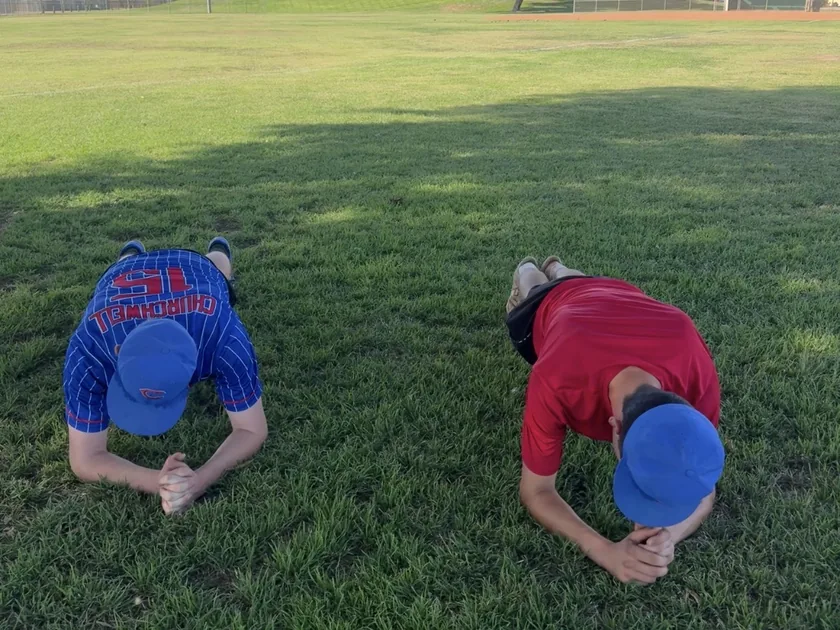
Squatting, hinging, lunging and landing properly. Unglamorous, and the foundation everything else is built on — including staying healthy.
Age-appropriate strength
Bodyweight and coordination for younger players; progressive, well-supervised loading for older ones. Never the other way round.
Rotational power
Where a swing and a throw actually come from. Learning to sequence hips before shoulders transfers straight back into hitting and pitching.
For parents
On young athletes and strength work
There's a persistent worry that strength training stunts a young athlete's growth. The research doesn't support it. What the research does support is that properly coached, age-appropriate resistance work makes young athletes more durable and less prone to injury.
The word doing the work in that sentence is properly. That means bodyweight and movement quality before load, technique before intensity, and an adult watching every repetition. A twelve-year-old should be learning to squat, land and decelerate well — not chasing a number.
If your player has an existing injury or a medical condition, clear it with their doctor before starting anything new. That's a medical question, not a coaching one.
- Technique before load, every time, without exceptions.
- Quality over volume. Speed work done tired is just conditioning.
- Rest is part of it. Especially in season, on top of games and practice.
- It's a season-long build, not a fortnight of drills before tryouts.
- Honest scope. A serious periodised programme needs a specialist strength coach, and I'll say so.
Pairs well with base running
Acceleration work and base running are close cousins — leads, first step and reading a pitcher are the on-field application of everything on this page. See fielding and base running →
Questions
Speed and strength questions parents ask
Is my child too young to lift weights?
Almost certainly, and that's not what this is. For younger players the work is bodyweight, movement quality and coordination — learning to accelerate, decelerate, change direction and land properly. Load comes later, gradually, and only once a player has earned it with clean movement. Done that way, strength work for young athletes is well supported by the research and is protective rather than risky.
Will this make my player faster?
Home-to-first is about thirty yards, which means baseball speed is almost entirely acceleration rather than top-end sprinting. Acceleration is very trainable, and most young players have never been taught how to start. That's usually where the quickest gains are.
Can we combine this with hitting or fielding?
Yes, and it works well. A session can split between skill work and movement — and base running in particular sits right on the line between the two.
Do you write full strength programs?
I coach athletic development for baseball players — movement, acceleration, change of direction and age-appropriate strength. If your player needs a serious periodised strength program, especially a high schooler chasing college looks, that calls for a specialist strength coach and I'll say so rather than take the booking.
What does my player need to bring?
Trainers or cleats depending on the surface, and water. Nothing else.
Let's talk about your player
Tell me a little about them — age, position, and what you're hoping to work on. I'll get back to you personally, usually within a day.
Lessons start at $75 an hour.