Oklahoma City · Private instruction
Catching lessons in Oklahoma City
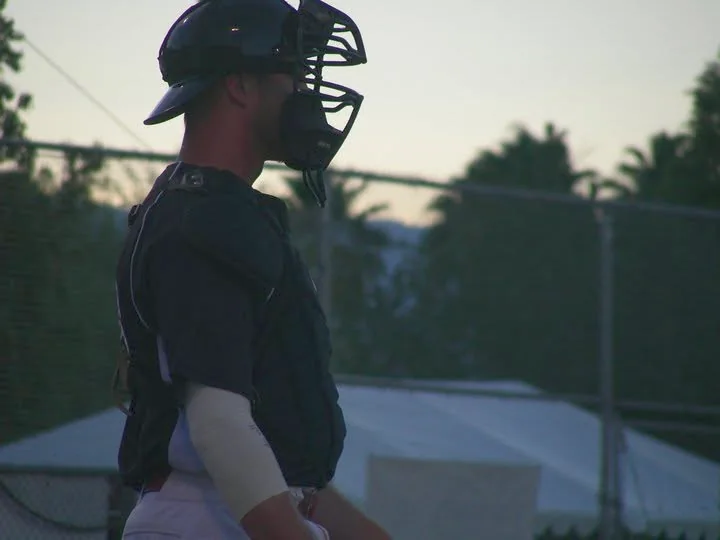
The hardest position on the field, and the one almost nobody teaches properly. I played it. Now I coach it — one catcher at a time, baseball or fastpitch.
Why this matters
Most young catchers were never actually taught
Here's how it usually happens: a team needs a catcher, one kid is willing to put the gear on, and that's the end of the instruction. They learn by absorbing hits. Nobody shows them how to receive a pitch, how to get their body in front of a ball in the dirt without flinching, or how to get rid of it quickly on a steal.
It shows up later. A catcher who can't receive costs their pitcher strikes on every borderline pitch. A catcher who blocks with their glove instead of their chest gives up runs. A catcher with a slow transfer has a strong arm that doesn't matter.
All of it is teachable. None of it is complicated once someone breaks it down properly.
What we work on
The full position, broken into pieces
Nobody works on all of this at once. We find the two or three things holding your catcher back right now and start there.
Receiving & framing
Quiet hands, correct glove angles, and catching the ball so it looks like a strike instead of yanking it back across the zone. The single highest-value skill a catcher has, and the one most likely to be coached badly.
Blocking
Getting the chest to the ball, killing it in front, and keeping it close enough to recover. As much about angles and confidence as it is about reaction time — a catcher who trusts their gear stops flinching.
Throwing & footwork
Transfer, footwork on the exchange, and a clean, repeatable throw to second. Most pop-time problems live in the hands and feet, not the arm.
Stance & setup
Primary and secondary stances, one-knee versus traditional, and how to give a target that a young pitcher can actually find. Fitted to the player and their level, not a copied style.
Running the game
Pitch calling, tempo, knowing the count and the situation, and managing a pitcher who's starting to unravel. The catcher is the only player facing the whole field — that's a job.
Durability
Knees, back, and throwing arm. Catching is hard on a growing body, and the setup habits a player builds at twelve determine whether they're still catching at eighteen.
The other half
Catchers carry the mental load of the whole team
A catcher touches every single pitch. They're the only player who has to shake off a bad moment immediately, because the next pitch is coming whether they're ready or not. They also absorb whatever the pitcher is feeling, and often the umpire's mood along with it.
That's a lot for a thirteen-year-old. We work on it directly — resetting between pitches, leading a pitcher who's rattled, and separating "I made a mistake" from "I'm not good at this."
- Reset routines that fit between pitches, not between innings.
- Leading a pitcher who has lost the zone or lost their composure.
- Handling umpires without getting themselves or their pitcher squeezed.
- Owning mistakes without carrying them into the next inning.
- Being the loudest voice on the field when that doesn't come naturally.
Questions
Catching questions parents ask
What age should a catcher start getting instruction?
As soon as they're catching regularly in games. Catching is the most technical position on the field and the habits form early — a young catcher who learns to receive properly avoids years of undoing bad technique.
Does my catcher need to bring their own gear?
Yes — I don't keep loaner gear, so your catcher will need their own. That includes their mitt, which matters anyway: we should be working with the equipment they actually use in games.
My catcher is fine defensively but can't hit. Can we work on both?
Yes, and most of my catchers do. Catching and hitting are separate skill sets — we can split a session or alternate week to week depending on what the season calls for.
What's a good pop time?
It depends entirely on age. Rather than chase a number, we measure where your catcher is now and work on the pieces that actually make it faster: transfer, footwork, and throwing accuracy. Speed follows clean mechanics, not the other way around.
Do you work with fastpitch softball catchers?
Yes. Receiving, blocking, footwork and the throw down to second are the same job behind either plate, and the game-management side — reading a count, managing a pitcher, controlling tempo — carries across completely. Fastpitch catchers are some of the least-coached athletes in the sport.
Do you coach one-knee setups?
I coach the setup that fits the player, the level they're at, and what their pitching staff needs. One-knee has real advantages for receiving and real trade-offs for blocking and throwing. I'll explain the trade-offs rather than push a style.
Let's talk about your player
Tell me a little about them — age, position, and what you're hoping to work on. I'll get back to you personally, usually within a day.
Lessons start at $75 an hour.