What to do with anger on a baseball field
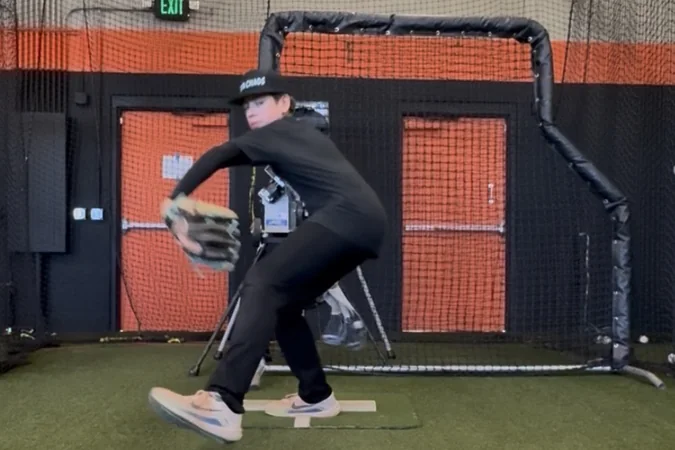
Every coach has watched this. A kid takes a called third strike on a pitch that was off the plate, and the next ten minutes are gone. The helmet gets slammed. The glove gets thrown at the fence. The next at-bat is angry and the one after that is worse, and by the fourth inning a decent player is having one of the worst games of his season — not because of the umpire, but because of what happened after the umpire.
So what do you actually tell a young player about anger? "Calm down" doesn't work, and never has. Neither does pretending they shouldn't feel it.
Anger isn't the problem. What it does to your hands is
There's a popular idea in sports that anger is fuel — that you take the fury and let it power you.
I'd be careful with that one, because it depends enormously on what the task is. For something that's pure effort and power, a surge of anger can genuinely help. Baseball is almost never that. Hitting is a timing and decision task with a window of a few hundredths of a second. Pitching is fine motor control. Receiving a ball cleanly is touch.
Anger does a specific thing to those: it speeds you up and narrows what you're seeing. An angry hitter swings at pitches he'd normally take, and swings early. An angry pitcher overthrows, misses arm-side, and walks the next guy. The feeling convinces you you're locked in. The results say otherwise.
So the honest version isn't "harness your anger." It's: that feeling is real and it's telling you something true, and the worst possible moment to act on it is right now, with a bat in your hands.
Frustration is information
Here's the reframe I actually use with players.
Being frustrated means you care and you think you should have done better. Both of those are good. A kid who strikes out and feels nothing is a kid who's checked out, and that's a much harder problem than a kid who's furious.
So the feeling isn't the enemy. The question is only ever when you deal with it, and the answer is: not during the at-bat, not during the inning, and ideally not during the game. There's a version of you after the game who can look at what happened clearly and pick something to work on. That version is useful. The one holding the bat right now is not.
What that looks like in practice is a reset — something physical and boring that marks the end of the last pitch. Step out, one breath out slower than the breath in, adjust something, step back in. It isn't magic and it isn't meditation. It's a routine that gives the feeling somewhere to go, so it doesn't follow the player into the next pitch.
The reason it works is that it's a decision a player can execute when thinking clearly is hardest. You can't decide to feel calm. You can decide to step out and breathe.
The umpire
Bad calls happen. The strike zone moves. Umpires are people, mostly doing this for very little money, and at the youth level some of them are learning the job in real time.
None of which matters, because here's the part worth getting into a young player's head early: arguing has never once changed a call. Not in Little League, not in the big leagues. The call is made. The only thing still undecided is what you do next.
I'd rather a player spend that energy on something with a return. If the zone is wide today, that's not an injustice to be absorbed — it's data. The zone is wide today, so I'm expanding what I'll swing at with two strikes. A hitter who adjusts to a generous zone is doing something a sulking hitter can't.
It's worth saying plainly to kids that this isn't about being passive or "respecting authority." It's that anger aimed at something you can't change is anger you've thrown away.
The kid who gets in his own way
You see this at every level: a player whose main opponent is himself. He's talented, he's done the work, and he's beaten before the first pitch because of the commentary running in his head.
The giveaway isn't the outburst. It's the pre-emptive stuff — the of course when something goes wrong, the "I always do that," the laugh when he misses that's meant to show he wasn't really trying. That's a player protecting himself from caring too much in public, and it costs far more than the bad call ever did.
What helps here isn't a pep talk. It's narrowing the job. A hitter who's thinking about his average, the scouts, his dad, and the last at-bat has no attention left for the pitch. A hitter whose entire job this pitch is see it early, swing at strikes has a chance.
That's the actual skill: shrinking the thing you're responsible for until it's small enough to do.
For parents
A few things that make this easier, from the other side of the fence.
The car ride home is where most of this is either reinforced or undone — I've written about that separately, and it's probably the single highest-leverage thing a parent controls.
Beyond that: a player who sees adults raging at umpires learns that raging at umpires is what you do. Kids are extremely good at spotting the difference between what they're told and what they're shown.
And if your child throws a helmet, the useful conversation isn't that night in the car. It's two days later, calm, when you can ask what they were feeling and what they'd rather do next time — and actually agree on the next time. Discipline in the moment stops the behaviour. A plan stops the next one.
The short version
Anger is honest. It means something mattered. The skill isn't getting rid of it, and it isn't converting it into some kind of rocket fuel either — it's learning to put it down for ninety seconds, do the next thing properly, and pick it back up afterwards when it can actually be useful.
That's teachable, it's the part of the game almost nobody coaches on purpose, and it's where I spend a lot of my time. If this is what your player is wrestling with, here's how I work on it — or tell me about them and I'll give you a straight answer about whether I can help.